
Recently modified articles
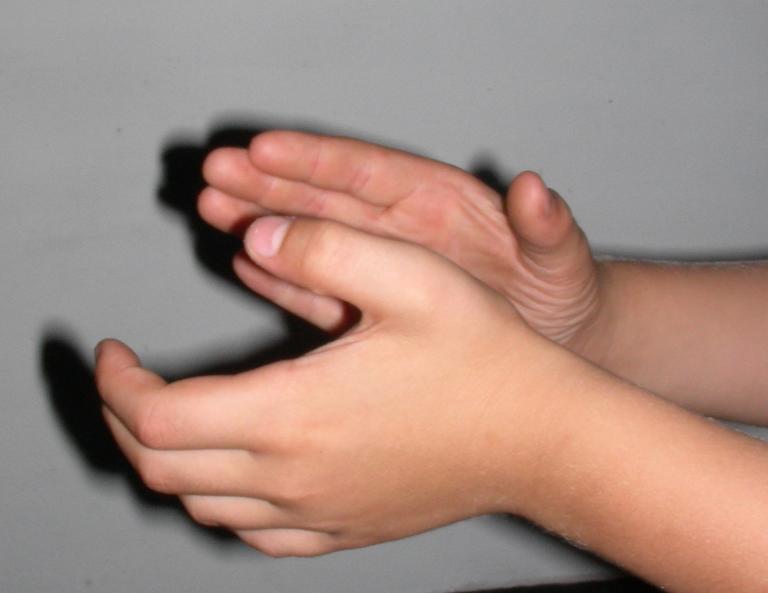
Here you will find a dynamic hand clapping exercise that requires cooperation and strengthens the group feeling.
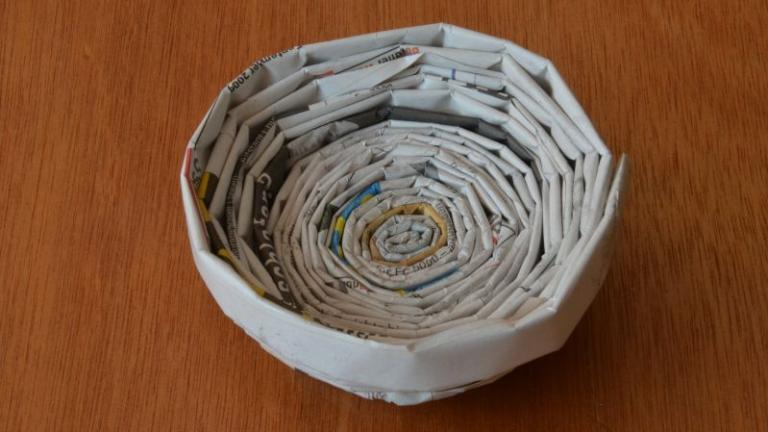
A simple way to make a fruit bowl from old newspapers/magazines. You can find more pictures and instructions here.
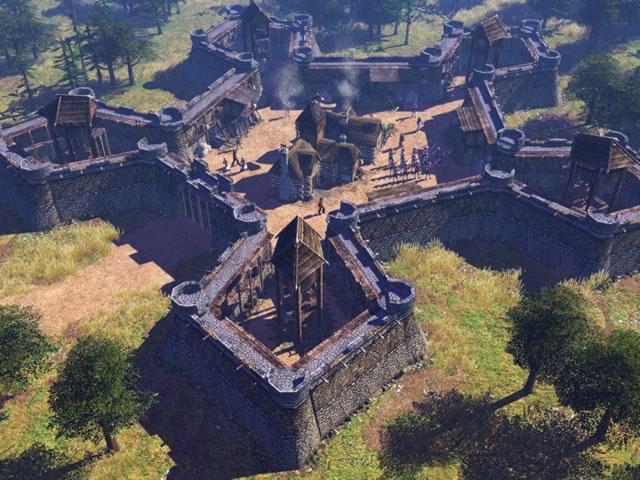
A game based on popular computer strategies.
A fun game to get to know each other
There are many ways in which a quiz can be organized: 1,2 or 3, Who wants to be a millionaire, The big prize, etc. You can find another, slightly different quiz method described here.
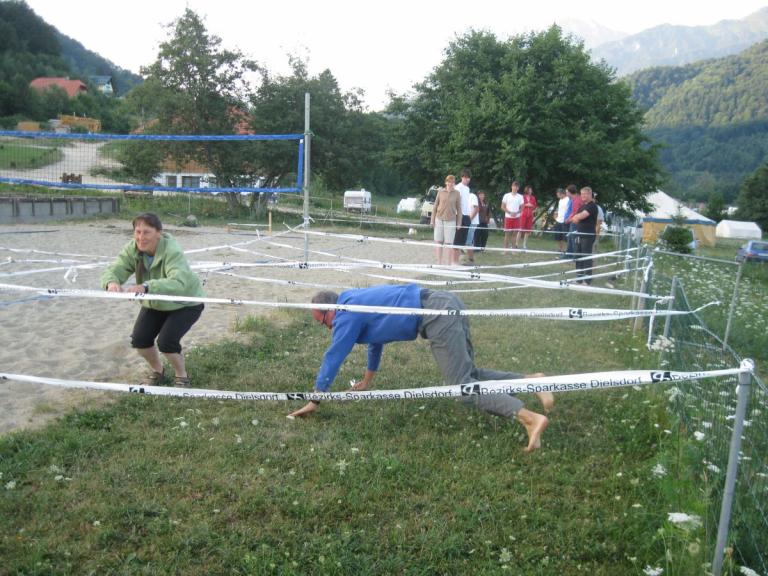
Equipment: area marked off with tape
Participants are divided into two teams that compete in a relay race. Everyone must crawl under the tape and perform a squat (girls) or a push-up (boys). After completing the task, they return to their team and pass the baton.
For more details, see the image and video.
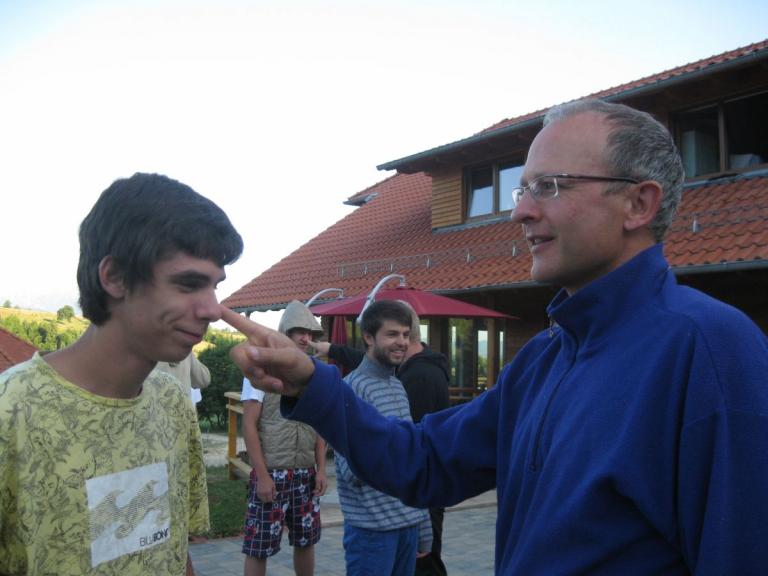
For a group of teenagers—it doesn’t matter how many, as long as it’s an even number—the commands might be something like: head to nose, knee to stomach, fist under the chin, head to head, kick to the buttocks, elbow to the solar plexus, foot to the shin, sole of the foot to the abdomen, finger to/in the nose, head to the abdomen, hand to the throat, knee to the forehead, head to the back, sole of the foot to the shoulder, etc.
No materials are required.
For a group of children, the commands may differ to avoid the risk of injury: fist to fist, palm to ankle, little finger to little finger, back of the head to back of the head, shin to abdomen, shin to back of the head, ankle to back of the head, palm to mouth, etc.
Once the participants get the hang of it, the pace can be increased and the last pair can be eliminated, until only one winner remains.
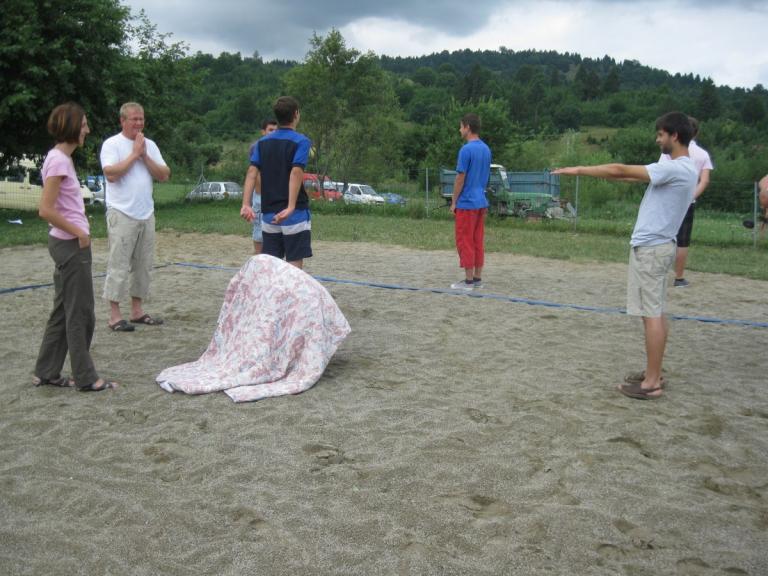
Materials: a blanket, tarp, or large piece of fabric
Participants walk around with their eyes closed and their arms outstretched within a designated area. At some point, the trainer will approach someone, touch them, and drape a blanket over them. At the sound signal, everyone stops and opens their eyes. The RULE is that no one is allowed to turn their head or look around. Each person will name who they see within their field of vision, without moving their head. After the group guesses who is missing (who is hidden under the blanket), the game resumes.
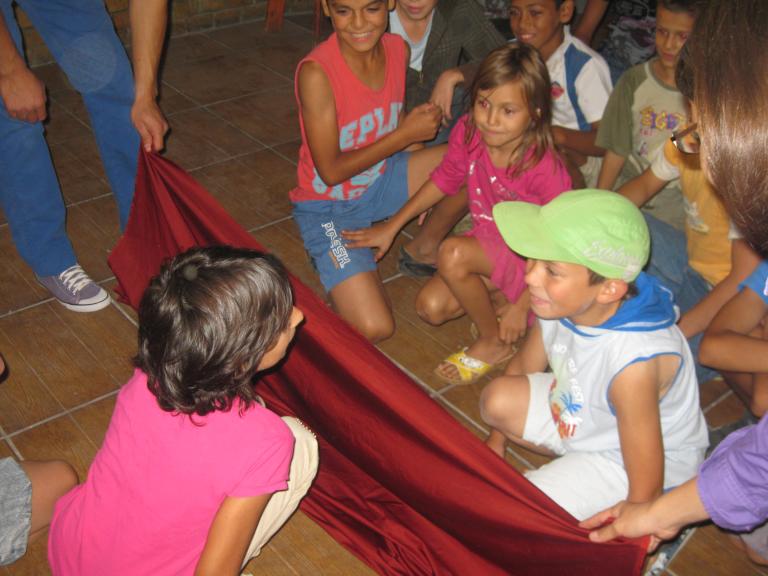
Materials: a blanket/tarpaulin/piece of fabric
Participants are divided into 2 teams (5–20 children). Before that, everyone goes around introducing themselves, once or twice.
Two leaders stand between the two teams, holding the blanket up so that the two teams cannot see each other. The rule is that, one at a time, the teams designate a representative to stand in front of or behind the blanket. After counting to 3, the leaders lower the blanket so the two can see each other. The first one to say the other’s name wins, and the loser switches to the opposing team. After a few rounds, the blanket is lowered without warning. The team with the most children at the end wins.
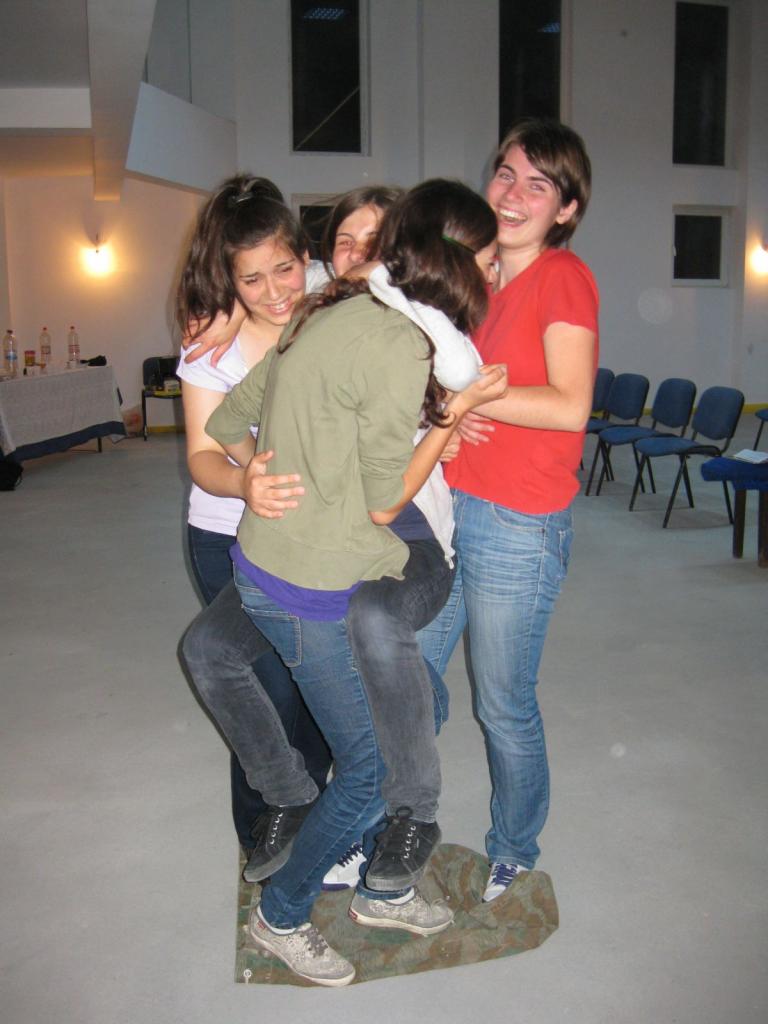
Materials needed: a folded tarp or a blanket / piece of fabric × number of groups
Participants are divided into groups of 4–8 people and all climb onto the tarp.
They are told that they are at a bazaar in Turkey and a merchant is offering them a very good deal on a magic rug that will take them home faster. The only thing they need to keep in mind for it to work is that if it rains, it must be wet on both sides.
They’re now flying at an altitude of 10,000 meters. They’re almost home; but… It’s starting to rain in heavy drops… the magic carpet is beginning to lose altitude… they have to flip it over to the other side as quickly as possible, or they’ll all die!
The teams have 5 minutes to figure out how to flip the mat over without anyone falling off.
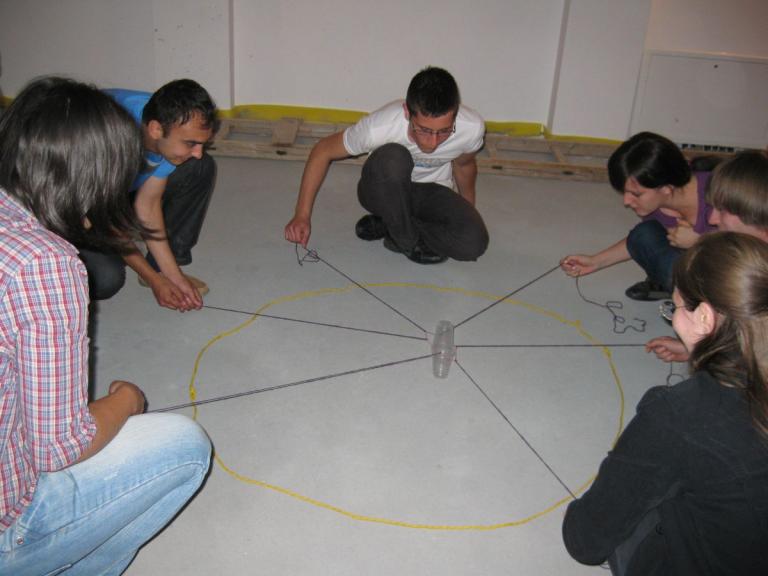
Materials needed: (one rubber band, 6 pieces of string approx. 1 m long, one circular piece of string, 2 disposable cups) x 2 or as many as there are teams
Participants are divided into 2 or more teams (of 6 people each) and are given the materials listed above, arranged as shown in the accompanying image.
Participants are told that the nuclear reactor has broken down and it is up to them to repair it in time to save their city from a nuclear disaster. Therefore, they must work as a team to quickly find the best strategy for forming a cone by stacking the two middle cups on top of each other. To avoid endangering their lives during the repair process, no one is allowed to go beyond the edge of the concentric string. The only way to handle the cups is by using the strings attached to the rubber band.
You may set a time limit before the game begins to emphasize its competitive aspect.
CAUTION: A flat surface is required for the game to work properly.
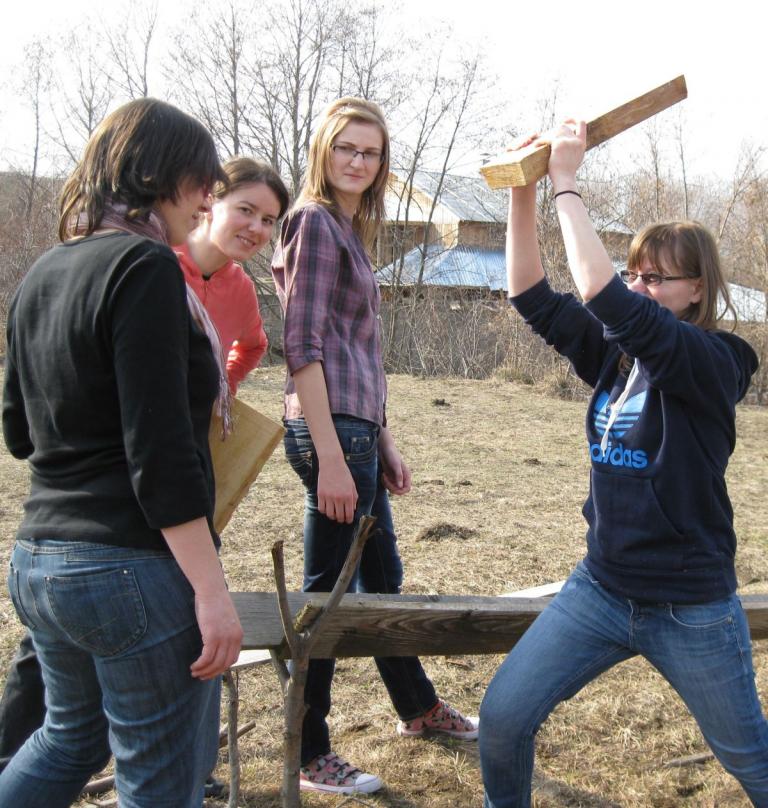
Materials: planks, wire, carabiners, a ball, a plastic bottle, a hammer, and any other items that could serve as accessories.
Participants are divided into teams of approximately 4–10 members.
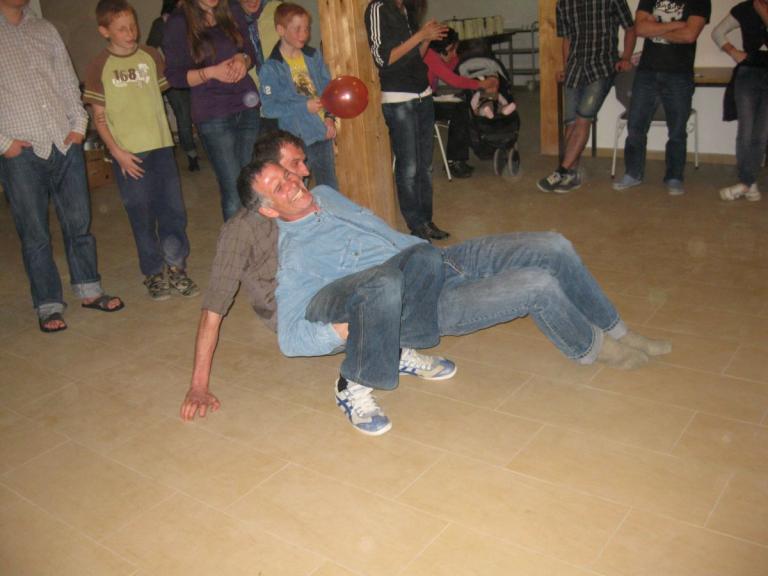
Participants are divided into two or more mixed teams based on gender, age, weight, etc.
A “battle” area is marked off—a smooth, flat surface where potentially dangerous obstacles have been removed—and two people at a time (from opposing teams) face off.
The starting position is on the back, with the soles of the feet and palms firmly planted on the ground, without the pelvis touching the ground. The goal of the two opponents is to destabilize the other by pushing, pulling, or using other strategies, without striking them. When one of them touches the ground with their pelvis, they lose and are out of the game. The team that lasts the longest in the ring wins.
No equipment is needed.
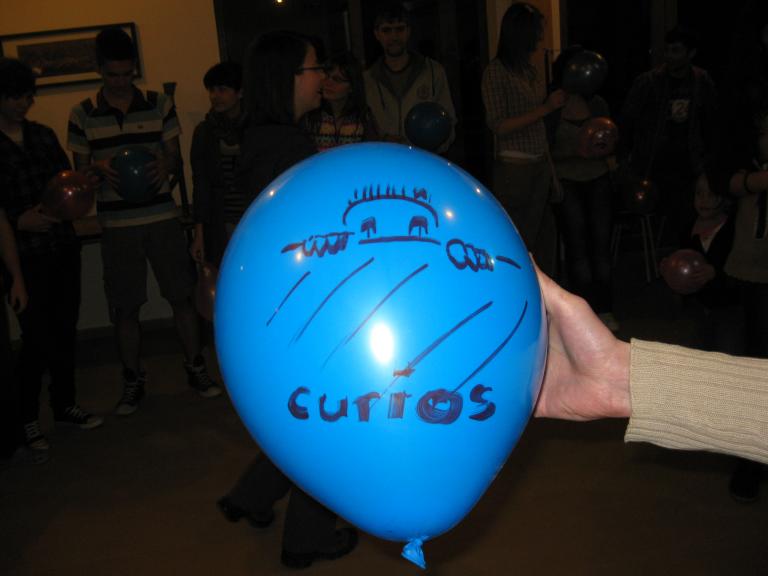
Materials needed: balloons for each participant and several markers.
Participants form a circle. Each person receives a balloon and a marker. They are invited to represent themselves with a word or image that they draw on the balloon. To keep the process from dragging on, a maximum of 5 minutes is allotted for this.
Once everyone is finished, at a signal, the balloons are thrown into the air and scattered; at another signal or when the music stops, everyone picks up a balloon. Participants have three tries to guess who the balloon belongs to and why.
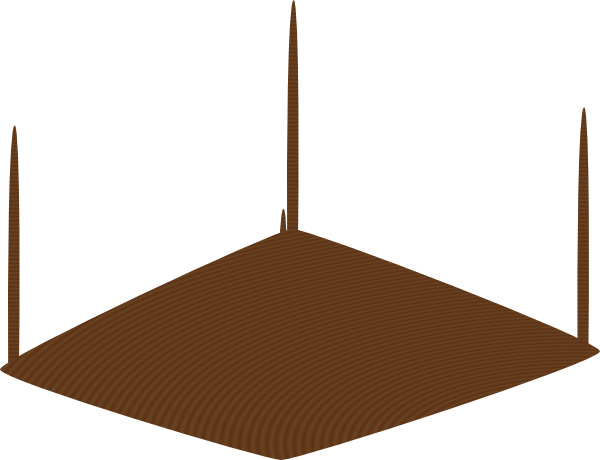
Materials needed: a table (coffee table; standard), bowls (at least one or more identical ones), or circles.
Turn a table upside down; participants divide into two teams, which line up next to each other.
Mark off a throwing distance; each participant takes turns throwing the bowl or ring once to hit one of the table’s first two legs. If the throw is successful, one additional throw may be allowed. If the pot/hoop hits one of the last two legs of the table, the point is awarded to the opposing team. After 10 or more throws, the game ends and the winner is declared.
Photo source: http://bestclipartblog.com/28-table-clip-art.html/table-clip-art-2
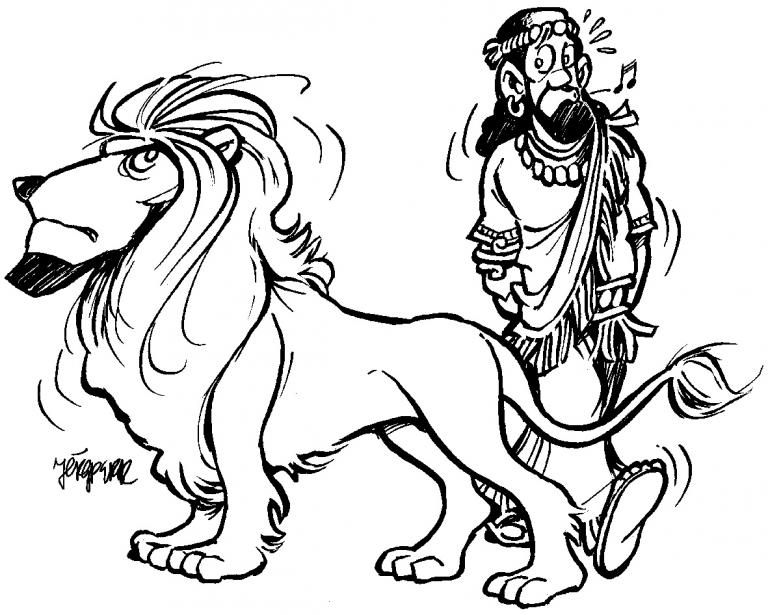
7 detailed young people's afternoons on the topic of Daniel

There are many crimes in this world. In this program, your youth group will become the “Top Secret” intelligence agency. The children will be divided into different departments to receive specialized training for the agency. The mission: to rescue a kidnapped chemistry lab technician.
Have fun!!

Be well prepared for emergencies in the youth group. Unfortunately, even we are not immune to accidents, illnesses, or tick bites. This document is intended to help you prepare for these scenarios.